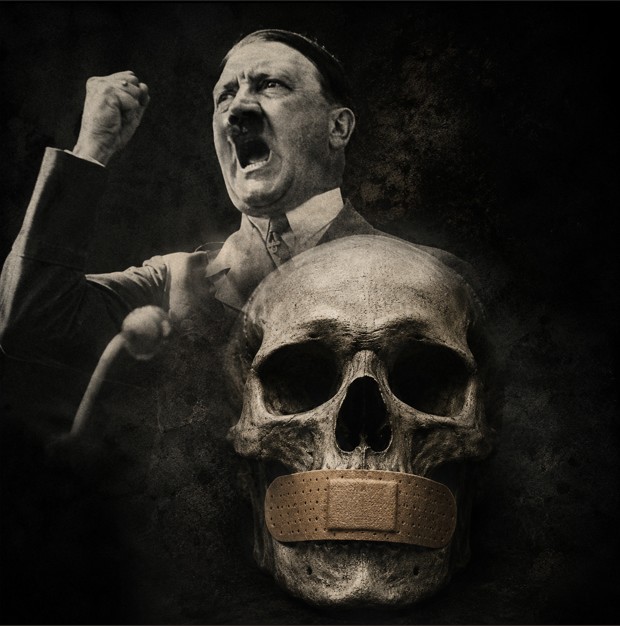
One of the lessons I believe we should never forget from Nazi Germany is how quickly freedom of speech disappeared after Adolf Hitler became Chancellor in 1933. The loss of freedom did not happen overnight. There was no single day when Germans woke up and discovered they were living under a totalitarian regime. Instead, freedoms were chipped away, one piece at a time.
Before long, people were free to speak only if what they said aligned with the goals and ideology of the Nazi Party. Newspapers were censored. Political opponents were silenced. Citizens learned to watch their words. They learned that certain opinions could bring consequences. Eventually, many people stopped speaking their minds altogether.
I often wonder whether we truly appreciate how important freedom of speech is until we begin to lose it.
When most people think about threats to free speech, they think about government censorship. That is certainly a danger. But in my view, some of the greatest threats today are coming from a broader culture that increasingly punishes disagreement.
What concerns me is that many people now feel they must carefully measure every word they speak. Not because what they are saying is illegal, hateful, or threatening, but because it may be unpopular. They fear losing their jobs, damaging relationships, being publicly shamed, or being pushed out of organizations they care about.
What troubles me even more is that this pressure often comes from our own side.
In today’s political environment, it is no longer enough to disagree with the opposing party. Increasingly, people are expected to agree with every position held by their own party as well. If they question a policy, challenge a leader, or offer a different perspective, they may find themselves attacked by the very people who should welcome honest debate.
I don’t care whether the pressure comes from the political left, the political right, a corporation, a church, a civic organization, or a government agency. The principle is the same. A society that discourages people from speaking honestly is moving in a dangerous direction.
A healthy society is noisy. It is full of disagreement. It is full of arguments, debates, and competing ideas. Freedom does not require us to agree with one another. It requires us to tolerate disagreement.
That is why I become concerned whenever I hear people argue that certain opinions should not be heard, that certain viewpoints should be silenced, or that dissenters should simply be excluded from the conversation. Those arguments may feel justified when directed at people we oppose. But history teaches us that once the machinery of censorship is built, it rarely stays confined to one target.
The greatest danger is not censorship itself. The greatest danger is the culture of fear that censorship creates. When people become afraid to speak, they eventually become afraid to think. And when people become afraid to think independently, freedom is already slipping away.
I am not suggesting that we are living in Nazi Germany. We are not. But history offers warnings, and wise people pay attention to warnings before it is too late.
Freedom of speech is not tested when everyone agrees. It is tested when someone says something unpopular. It is tested when a person challenges authority, questions conventional wisdom, or disagrees with the crowd.
If we want to preserve a free society, we must defend the right of others to speak—even when we strongly disagree with what they say. The moment we demand silence instead of debate, we take a step toward the very kind of oppression that history has repeatedly warned us about.
Freedom of speech is the first liberty to fall. Once it is gone, the others are rarely far behind.
By Karina Schmitt, Blog Contributor