Campaign Silence on Controversial Educational Issues
Most candidates for school board will not put it on their campaign materials or website if they want to eliminate textbooks that misrepresent Islam and hold the publishers accountable, such as McGraw Hill, who sells millions of textbooks to public schools, including to Charlotte County Public Schools.
Most candidates for commissioner do not speak openly about any desire they may already have to push back or plan to push back when elected on the progressive rise of Islam in their county. None of them, in almost any county across the state (that I have seen) are speaking about closing Islamic culture centers, mosques, or taking on the schools for misrepresentation of Islam in public school textbooks.
Fact: the Quran teaches to kill non-believers, taken from the Quran, Surah 9:5, known commonly as the Sword Verse, which says: ““Kill the polytheists wherever you find them…” Commonly, the Arabic word mushrikeen (المشركين) is paraphrased with the word “infidel” although other translations of the Quran translates the word to mean “polytheists,” “idolaters,” or “pagans”.
However, the act of taking someone’s life, killing that is, is illegal and does not align with our laws. Thus, and this is the what the dialog behind closed doors revolve around, would it not be justified to close and ban locations that preaches killings of other people?
In Charlotte County, right now, several Republicans are running for county commissioners in District 2 and 4. However, it appears that none of the candidates have paid a visit to the Islamic culture center in Port Charlotte. They may support the new No Sharia Law that has been passed, but most of them won’t dive into deep discussions about what this really means in terms what is taught and preached inside these mosques, culture centers, or some businesses across the state. It’s barely possible to break into a dialog with candidates about the issue. Why?
So, let’s approach the discourse in a different way and talk about what is taught in schools as this is partly where the misleading teachings start.
How Islam Is Presented in Public School Textbooks
In public high schools, world history class textbooks have for years painted a somewhat misleading picture of what Islam views non-Muslims.
For example, Glencoe World History, Florida Edition, Chapter 6: The World of Islam, 600–1500, misleadingly states that, “Islam held that all people are equal in the eyes of Allah. In reality, however, equality was not strictly the case. Class divisions were common, and both slaves and women faced various restrictions. Slaves, though, sometimes could gain their freedom. Early Muslim women enjoyed many rights, but these rights were eroded by older customs and traditions.”
While it does state that “equality was not strictly the case,” it is misleading to use the past tense in that sentence, as inequality between men and women in Muslim countries still exist in Muslim countries and parallel societies in the west.
The textbook also fails to quote the Quran that calls for killings of non-believers, as mentioned above referencing Surah 9:5, which is still taught in Islamic teachings to this day.
Primary Sources vs. Classroom Teaching
Often high school history teachers – whether they have been ordered to do this – fail to use primary sources, such as the Quran, in public educational materials. Textbooks are at best secondary sources. Rightfully, they are tertiary sources, as the authors of these texts very selectively pick and choose from primary and secondary sources what they want the students to know. This is a way to keep students from knowing the truth about what the scriptures really teach.
If they were allowed to use other literature, such as critics of Islam, or even the Quran itself, perhaps students would learn that these problems, such as equality between men and women do exist in Islam. The textbook fails because they use past tense, when in fact they should use present text. Inequality in Islamic teaching and culture is not something of the past. It is present. It is here. It is still a problem.
The textbook chapter states that, “women faced various restrictions.” Again, the author fails to teach the students that it is not something that happened in the past. The author used past tense again of the verb “faced” when rightfully it should say “faced and still face various restrictions.”
What Is Omitted From Classroom Context
But it gets worse because the textbook fails to provide examples of these inequalities and restrictions. If high schools are to objectively teach this subject, they must not fail to contextualize with the teachings in the Quran or even real modern-day examples, such as when a woman, and that is practiced all over the Muslim world, is beheaded for what is perceived to be dishonoring her husband and when she is denied proper legal representation, as she would have been entitled to in a Western Christian-based country.
Why do public school materials mislead students with watered down tertiary texts instead of studying the primary texts?
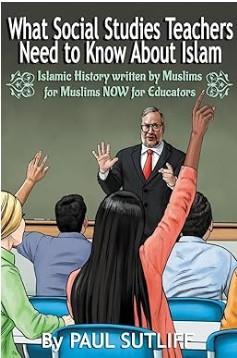
Recommended literature: Paul Sutliff “What Social Studies Teachers Need to Know About Islam” (2017). LINK