
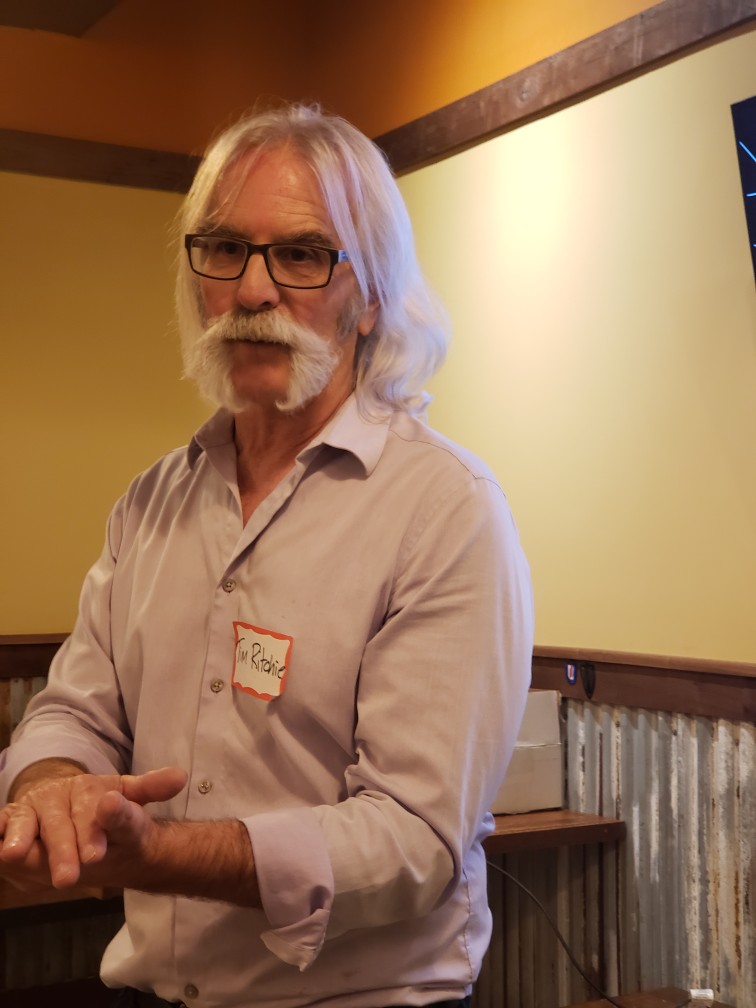
On March 2, 2026, Charlotte County resident Tim Ritchie spoke to the We the People Club about one of Florida’s most controversial industries: phosphate mining. As the writer of the article had learned about the serious health risks associated with phosphate mining, the We the People Club felt that it was important to bring in the expert in this area, Tim Ritchie, so shed some light on it.
Watch the Video from the Meeting on our YouTube channel: The Dark Side of Phosphate Mining
Rather than focusing on economic talking points, Ritchie addressed the long-term environmental and public-health risks tied to the industry, including aquifer contamination, radioactive waste storage, and the cumulative impacts of large-scale strip mining. His central message was clear: communities deserve transparency about both the benefits and the risks of phosphate extraction.
Ritchie has become one of Southwest Florida’s most persistent voices on the issue. As founder of the grassroots group March Against Mosaic, he regularly speaks at county commission meetings and contacts lawmakers to raise awareness about environmental and health concerns tied to phosphate mining. His advocacy highlights not only ecological damage but also the potential human health consequences associated with contaminated water supplies, including possible links to increased cancer risk.
Local leaders have taken notice. In 2022, the Charlotte County Board of County Commissioners voted unanimously to prohibit phosphate mining and phosphogypsum stacks within county limits through zoning regulations — a move widely seen as a proactive step to protect local water resources.
What Is Phosphate Mining — and Why Is It Done?
For those who are new to this topic, let’s take a moment to define what it is. Phosphate is a naturally occurring mineral containing phosphorus, a key nutrient used primarily in fertilizer. Modern large-scale agriculture depends heavily on phosphorus to maintain crop yields needed to feed a growing global population.
In Florida’s Bone Valley region, companies such as The Mosaic Company extract phosphate through surface, or strip, mining. This process removes large sections of land to access phosphate deposits beneath the soil. The ore is then processed into fertilizer products used around the world.
As you will see in the video from Monday’s meeting, Ritchie demonstrated the exact areas in question where this kind of mining is taking place in Florida, its proximity to Charlotte County and thus why it is important that we the people and lawmakers are all paying close attention to this issue.
While phosphate is essential to modern agriculture, the mining and processing involved generate significant waste streams. These byproducts — rather than the mineral itself — are the source of most environmental concern.
Some observers draw conceptual parallels to the story depicted in the film Erin Brockovich, which focused on groundwater contamination in California involving Pacific Gas and Electric. While the industries are different, both cases raise similar questions about groundwater safety, corporate transparency, regulatory oversight, corporate omissions of information relative to long-term health risks.
In Florida, critics of phosphate mining have expressed concerns about groundwater contamination and potential exposure to substances such as radon gas, arsenic, and cadmium. Ritchies showed images of highly contaminated water. Mosaic has faced regulatory actions and lawsuits in the past, though no single court case has produced a sweeping verdict establishing broad industry liability. For activists like Ritchie, that uncertainty makes continued public scrutiny essential. This is also where you can help by calling on lawmakers – such as state representatives – urging them to sponsor legilations that seeks to tighten regulations.
Environmental Risks
A major byproduct of phosphate processing is phosphogypsum, an industrial waste material created during fertilizer production. Phosphogypsum contains low levels of naturally occurring radioactive elements, including radium, and is stored in massive stacks that can reach hundreds of feet in height.
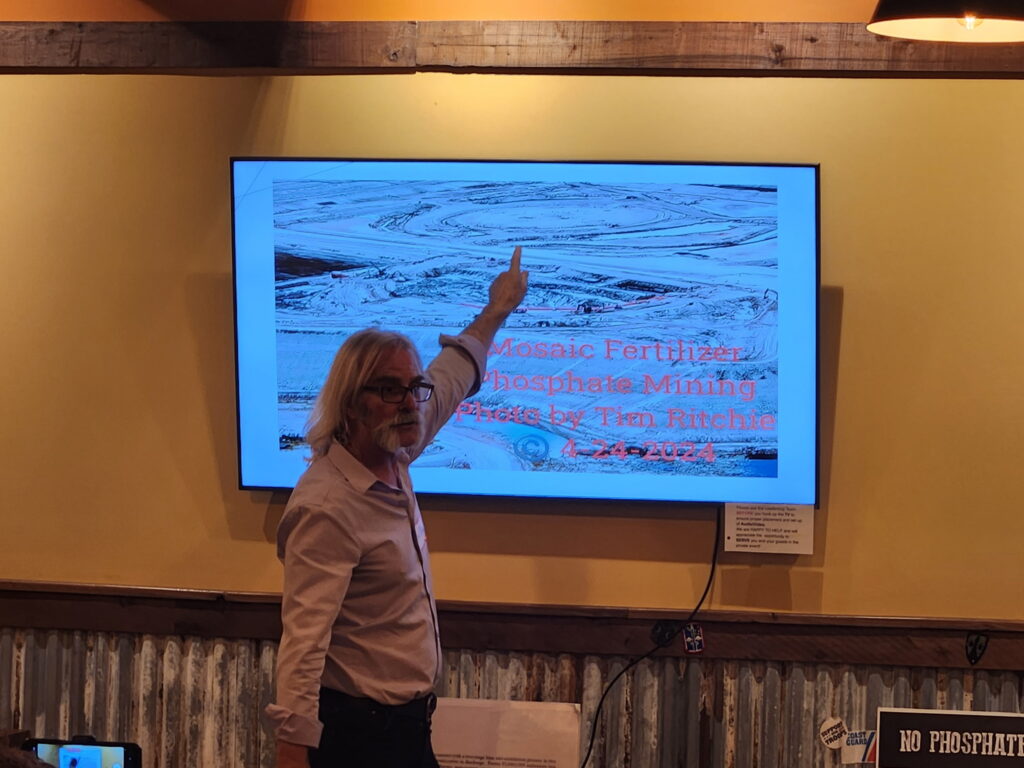
Ritchie, with a wealth of knowledge about this matter, outlined in detail the environmental concerns associated with these stacks, such as:
- Groundwater contamination from wastewater releases
- Sinkholes forming beneath storage areas
- Nutrient pollution affecting rivers and coastal ecosystems
- Long-term storage of radioactive material
Oversight is shared by the U.S. Environmental Protection Agency and the Florida Department of Environmental Protection. However, Florida’s porous limestone geology makes groundwater contamination particularly difficult to control once pollutants enter the aquifer system.
Health Concerns
Public-health discussions surrounding phosphate mining often focus on potential exposure to harmful substances, including:
- Radon emissions from phosphogypsum stacks. Radon is a known carcinogen and the second leading cause of lung cancer in the United States.
- Heavy metals such as arsenic and cadmium, which long-term exposure studies have associated with increased cancer risk.
- Airborne dust and emissions that may contribute to respiratory illness depending on exposure levels.
Although establishing direct cause-and-effect relationships in individual cancer cases is scientifically complex, the presence of radioactive materials and toxic metals continues to raise concern among residents and environmental advocates.
The Path Forward
Phosphate mining remains a powerful economic driver in Florida, supporting agriculture and jobs. Yet critics argue that the long-term environmental costs — particularly risks to drinking water and fragile ecosystems — could outweigh the short-term economic benefits. And this is something our state lawmaker must pay more attention to.
Florida’s aquifers, rivers, and estuaries are among the state’s most valuable natural resources and once contaminated, they can take decades to recover.
To balance economic activity with environmental protection, advocates like Ritchie argue that stronger safeguards are necessary. These could include tighter wastewater containment standards, independent groundwater monitoring, greater transparency in reporting environmental incidents, and stronger financial assurances to cover cleanup costs.
Ultimately, protecting Florida’s water, land, and public health will require continued civic engagement. Citizens can play – rather they need to play – a role by contacting legislators, attending local commission meetings, and supporting science-based regulatory policies.
Economic development and environmental stewardship do not have to be mutually exclusive — but safeguarding Florida’s natural resources must remain the priority.
We the People Club supports the work Tim Ritchie is doing, not just for the next generation that is growing up now or the next one after that, but for our grandchildren’s grandchildren as well.
We highly recommend that you – the citizen, the people of Florida – contact your state representative urging them to become more involved and active in passing legislation to protect our beautiful Florida environment and natural resources.
For Charlotte County residents:
If you’re in district 75, contact State Representative Danny Nix by email to voice your concerns about phosphate mining. https://m.myfloridahouse.gov/Sections/Representatives/custom/contactmember.aspx?MemberId=4921&LegislativeTermId=91
If you’re in district 76, contact State Representative Vanessa Oliver. https://housedocs.myfloridahouse.gov/Sections/Representatives/contactmember.aspx?MemberId=4922
If you’re outside Charlotte County, look up your state representative using your own address.
https://housedocs.myfloridahouse.gov/FindYourRepresentative
Whatever you do, don’t just do nothing. Contact your elected official. Your tax dollars are paying their salaries, so they work for you.