
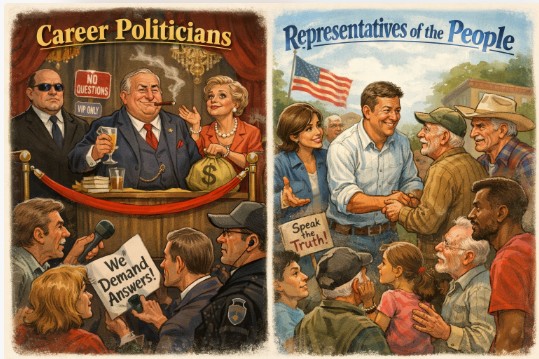
In a healthy republic, politicians are not elites to be protected from scrutiny. They are public servants—temporary stewards entrusted with power by the people. When that balance flips, when politicians begin acting as if we owe them something, democracy starts to erode. It does not matter what kind of office the politician serves. They are to serve us – the People, and it’s our job as voters to vet them and eliminate the bad apples who have been running our communities as they enrich themselves on our expense.
Career politicians – you recognize them, the opportunists – are focused on two things essentially: Money and Societal Prestige.
How to Spot A Career Politician
One of the clearest ways to distinguish a career politician from a genuine representative of the people is how they respond to questions.
Career politicians avoid unscripted conversations. They rely on handlers, curated audiences, controlled forums, and rehearsed talking points. They label tough questions as “hostile,” dismiss concerned citizens as “misinformed,” and retreat behind polished narratives approved by consultants and donors. They will mock questions they don’t want to answer as “scripted” or “with ill intent.” Their priority is not accountability—it’s preservation. Of status. Of access. Of power. They will block people on social media who tries to ask tough questions or expose their dirty laundry.
Public servants do the opposite.
They show up. They listen. They answer—even when the questions are uncomfortable. They don’t require pre-screened audiences or friendly moderators. they do not try to control the narrative cowardly. They understand a basic truth: every elected official works for the people, not the political class, not party leadership, and not special interests.
This is not radical. It is foundational.
In a free society, every candidate is obligated to answer to the public. Not selectively. Not only when it’s convenient. Not only to donors, media allies, or party insiders. If someone is asking for your vote, they are asking for your consent to govern—and consent requires transparency.
Elitism thrives on controlled narratives. It depends on convincing people that questioning authority is rude, dangerous, or unnecessary. But questioning authority is not disrespectful—it is responsible citizenship. Silence is not unity. Compliance is not trust.
True representatives do not fear the voice of the people because they come from it. They don’t talk down. They don’t deflect. They don’t hide. They engage, explain, and—when necessary—admit they’re wrong.
If a candidate cannot handle direct questions from everyday citizens, they are not prepared to wield public power. Get rid of them! These politicians will always just be a liability, a financial burden on taxpayers, and they will always engage at one point or another is dirty deeds.
Democracy does not belong to politicians.
Government does not belong to parties.
Authority does not belong to elites.
The United States has a republican form of government at all levels. It belongs to the people—and it always has. Accountability is not optional. It is the job description. If you encounter politicians – elected officials or candidates – who run from questions from the people, do what you can to get them out of office or get them out of the race. It’s your tax dollars in the end that these people use and abuse.